
中国から日本へ ― カタリナでの仕事は自分の価値観を広げるもの
データエンジニアリングチーム シニアデータエンジニア Lさん
中国の大手IT企業でエンジニアとして働いた後、コロナ禍を経て海外での転職を考え来日。2023年、カタリナのデータエンジニアとして入社。
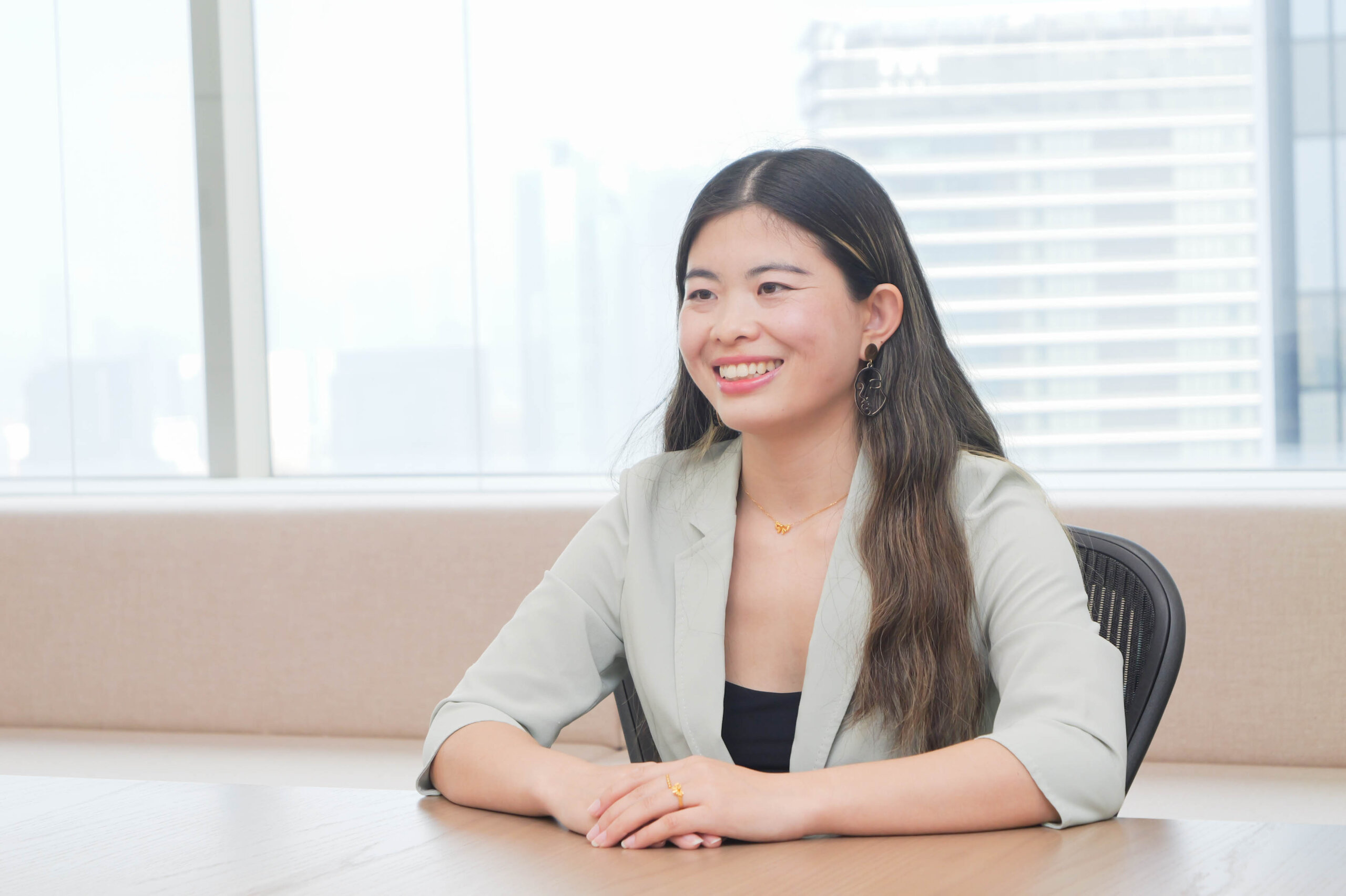
コロナを経て海外での就職へ。日本で出会ったカタリナが自分にとって一番良い選択だった。
— もともと中国にいらしたとのことですが、カタリナ入社の経緯はどういったものだったんでしょうか。
もともとは中国で大きな会社に勤めていたのですが、コロナ禍を経て東京に来て、日本語学校で4か月勉強しました。日本語学校を卒業してから、カタリナに入社しました。
転職を考え始めたのはコロナ禍で、中国では毎日のようにPCR検査が必要な厳しいルールがありました。一方で、会社では最新技術を学ぶ機会も多く、給与面でもとても快適な環境でした。
でも同時に、退屈さも感じていました。当時、私にとっては「給与」と「働き方」のバランスが取れていないと感じていました。そこで思い切って退職して、海外でのチャンスを探し始めました。
そのなかで人材エージェントから日本の求人を紹介してもらいましたが、中国からのリモートでの転職活動だったため、うまくいきませんでした。
そこで、まずは学生ビザを取得して、東京に来て日本語を学ぶことにしました。
— 柔軟性や将来の可能性を求めて、まず日本に飛び込んで、そのあとで仕事を探した、という流れですね。
はい。結果としては、本当に良かったと思っています。
次の仕事に対して、当時いくつか重視していたポイントがありました。
1つ目は、ワークライフバランスです。これはとても重要なポイントでした。前職は待遇面が充実していた一方で、働く時間がとても長く、当時の自分にとっては最適な働き方ではないと思っていました。もっと柔軟に働く時間と自分の時間をコントロールできる環境を望んでいたんです。
2つ目は、技術的な面です。私はコーディングやAIなどの先端技術、バックエンドエンジニアリングのリサーチが好きです。ただ、日本でそういった仕事に関わるとなるとITコンサルタントのような職種も多いと知っていて、当時の私はそういったポジションにはあまり魅力を感じていませんでした。
一番大きなな違いは、カタリナがより自由な社内開発環境と文化であることです。クライアントの要件によって業務が制約されるコンサルタント職とは異なり、カタリナでは技術的な意思決定を行い、高度な技術を実装する自主性を与えてくれます。この自由こそが、私が技術職で最も重視する点です。
そんななかでカタリナから今のポジションの話をもらい、「これは自分にとってベストだ」と感じました。
— カタリナはあなたにとって本当にぴったりな環境だったんですね。
はい。またマネージャーたちは新しい技術やサービス、ツールの導入にもとても前向きです。そのおかげで、自分自身のスキルを伸ばすこともできますし、キャリアの自己成長にもつながると感じています。
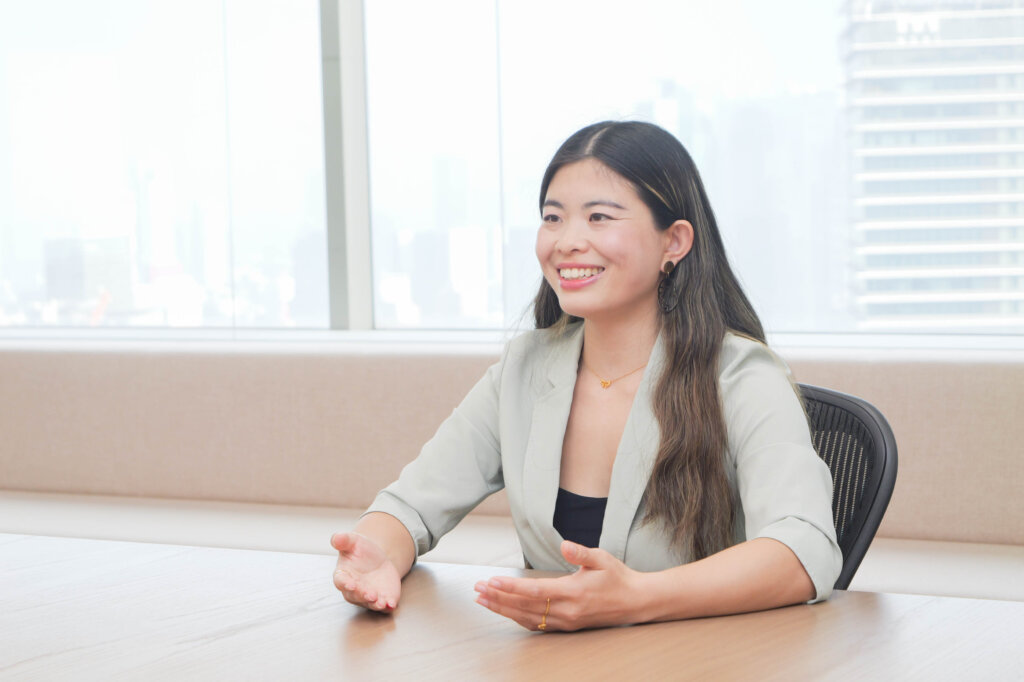
カタリナには個人を尊重してサポートする文化がある
— 海外での転職ですが、一緒に働くメンバーについて印象的だったことはありますか?
まず1つ目は、中国出身の社員が3〜4人いたことです。
はじめての海外での仕事で、しかもインターナショナルな環境だったのでとても緊張していたのですが、中国人メンバーがいたことで少し安心して働くことができました。
2つ目は、当時のマネージャーの存在です。彼はとても忍耐強く、私の話をじっくり聞いてくれました。
私は、新人としての仕事のプロセスがよくわかっていなかったのですが、彼はプロジェクトの進め方など、仕事に慣れるまで丁寧にサポートしてくれました。
— とても丁寧で具体的なオンボーディングだったわけですね。
そうですね。
あと驚いたのは、事業部長など高い役職の人たちの存在です。彼らは私たちにたくさんのトレーニングをしてくれました。
中国だと、規模の大きな会社では、あまり役職の高いマネージャーやディレクターが新入社員に直接レクチャーすることは多くありません。
会社の規模の問題もあると思いますが、ここではそういった方々が近い距離で関わってくれるのが印象的でした。
— 入社直後のオンボーディングの段階から、マネージャーやディレクターとの「繋がり」を感じたわけですね。カタリナには「人を尊重する文化」があると感じますか?
そう思います。
特に今のマネージャーはいつも本当に話をよく聞いてくれます。
私の不安や疑問を理解しようとしてくれますし、私が何かアイデアを持って「こういうことをやってみたい」と言うと、たとえそれがまだビジネスで使える段階ではない先端技術のリサーチであっても、いつも「やってみよう」と背中を押してくれます。
これはカタリナの価値観のひとつで、人を深く理解しようとする姿勢が表れていると思います。
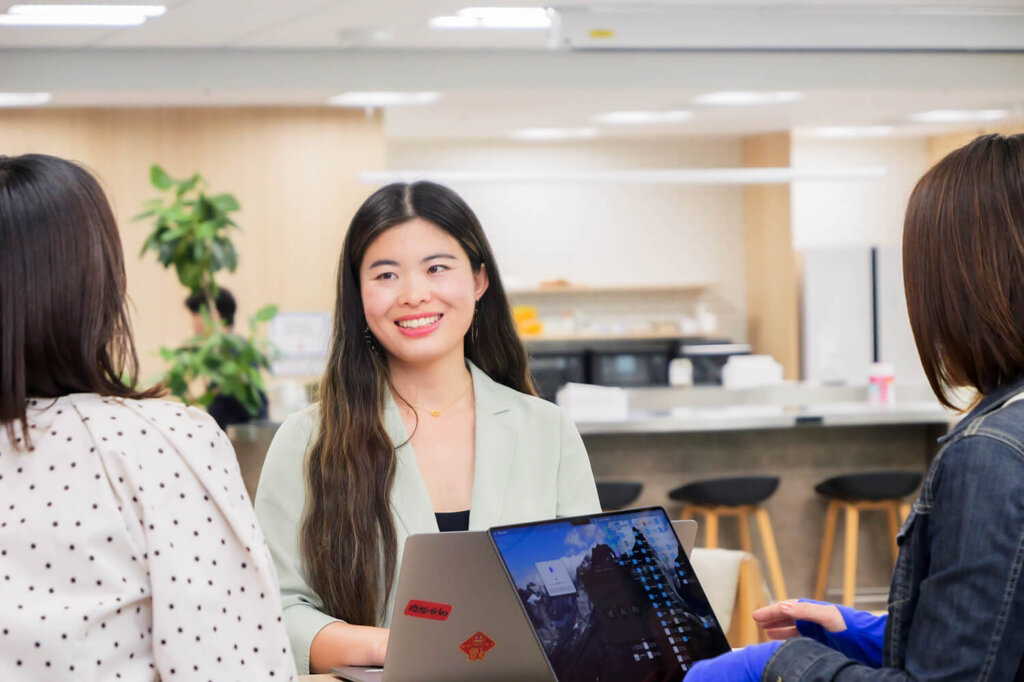
自分たちが関わったものを一人の消費者としても体験できる感動
— データエンジニアの仕事のなかで難しいと感じたことはありますか?
私は要件の整理からソリューションの設計、そして成果物をお客様に届けるところまで、一連のプロセスに関わっています。
過去の仕事で難しいと感じたのは、あるスーパーマーケット会社のプロジェクトでした。
スーパーマーケットのパートナー会社から要件が共有される形だったので、ステークホルダーが多かったんです。
ステークホルダーが多いなかでのプロジェクト推進には、PMチームが本当に大きな助けになりました。
PMチームのメンバーは英語と日本語の両方に長けていて、お客様の要件を正確に理解し、それを私も含め、外国籍のメンバーも多いエンジニアチームへわかりやすく伝えてくれました。そのおかげで、私たちエンジニアも「お客様の本当のニーズ」をしっかり把握することができました。
さらに難しかったのは、お客様自身も最初は要件をはっきりと把握できていなかったことです。「何をしたいのか」「何をすべきなのか」が、お客様の側でも明確ではありませんでした。
そこで、PMチームからお客様の要望を聞いたあと、エンジニアリングの観点から「この要望は実現可能か」「妥当か」を、改めて確認していきました。
— そのプロジェクトのなかで印象に残っていることはありますか?
1つ目は、このプロジェクトが実際にリリースされたときです。
それまでのコラボレーションやディスカッション、テストの積み重ねを思うとリリースの瞬間は本当に嬉しくて、誇らしい気持ちになりました。
2つ目は、今も日々お客様のデータを分析していることです。そこからさまざまなインサイトが見えてきて、キャンペーンに参加している消費者が増えていることも確認できます。その数字を見ることで、自分自身の達成感や成長も実感できます。
カタリナには日本中に多くのクライアントとネットワークがあります。そのため、私たちのプロダクトを実際の生活の中で目にする機会も多いですし、一人の「消費者」として自分で使うこともできます。
自分で使ってみて、「あ、これは自分が関わったプロジェクトだ」と実感できる瞬間は、とても大きな充実感につながっています。

カタリナでの経験は自分の視野を広げてくれる
— 中国から日本の会社へ入ってみてコミュニケーション面では困ったことはないでしょうか。
同僚たちはそれぞれバックグラウンドや文化、言語が違います。同じことを話していても、理解や捉え方が異なることがよくあります。同じテーマについて話していても、視点や意見が全く違うこともあります。
上でお話ししたプロジェクトでも、あるメンバーとのコミュニケーションに課題があった時期がありました。
私とそのメンバーの「考えるリズム」が違っていて、お互いに役職も異なっていましたから、物事の見方にもギャップがあったのだと思います。
マネージャーに相談したところ親身になって相談に乗ってくれて、いくつかのアドバイスをいただきました。
そのフィードバックを踏まえ、私は相手の話を落ち着いてじっくり聞きながら、相手の考え方や背景を理解しようとしました。するとそのメンバーはとても前向きに話をしてくれて、最終的にお互いを理解し合うことができました。
私自身が少し接し方を変えたことで、そのメンバーとのコミュニケーションが、以前よりずっと柔らかく、スムーズになったと感じています。
— カタリナに入る前の自分と、今の自分を比べてみて、人として一番大きく変わったところはどこだと思いますか?
一番は「オープンマインドになったこと」だと思います。
人生や仕事の環境が大きく変わったことで、これまでよりも多くのことに関わる機会が増えました。
人やその背景にある考え方の違いだけでなく、世界の雰囲気そのものも違います。そうしたなかで、「自分はどうすればもっと良い人間になれるだろう」と考えるようになりました。
他者に対してオープンでいること。新しい経験に対してオープンでいること。自分と違う意見に対してもオープンでいること。
正解・不正解ではなく、多様性があるだけなんだ、と捉えられるようになってきました。
— カタリナへの入社を迷っているエンジニアに、あなたは何と言いますか?
この会社では、「自分らしくいられる自由」を感じられますし、優秀な同僚たちから、本当に多くのことを学ぶことができます。
仕事の面だけでなく、人生そのものにも、たくさんの素敵な彩りを与えてくれる会社だと思います。
エンジニアの視点で言うと、ドキュメント作成だけでなく、実際にコードを書き、システムを設計するような、より「実務的なものづくり」に携わりたい人にとても向いている会社です。
私の友人のなかにも、プログラミングや設計が大好きな人がいますが、ドキュメント作成などの比重が大きいポジションではなかなか満足できない人もいます。
そういったエンジニアに、カタリナはとてもフィットすると思います。
— カタリナでの次の個人的な目標は何ですか?
これからは、マネジメントやリーダーシップのスキルをもっと伸ばしていきたいと考えています。
将来的にはマネージャーになることを目指していますが、その一方で、エンジニアとしての仕事も引き続きしっかり続けていきたいです。
新しいプロダクトやデジタルトランスフォーメーションの方向性について、いろいろなアイデアがあります。
それを形にしていくことで、お客様や消費者の皆さんにもっと貢献できるはずですし、より便利で優れたデジタルプロダクトを生み出せると思っています。
そうしたチャレンジを一つひとつ乗り越えていくことで、会社としてもより高いレベルに到達できると信じています。
そして、さらに多くの優秀な人たちに参加してもらい、一緒に「より良い明日」をつくっていけたらと思っています。
From China to Japan – Working at Catalina Has Broadened My Perspective
Data Engineering Team Senior Data Engineer Ms. L
After working as an engineer at a major IT company in China, she decided to pursue a career overseas during the COVID-19 pandemic and came to Japan. In 2023, she joined Catalina as a data engineer.
From COVID-19 to a Job Overseas. Catalina in Japan Is the Best Choice for Me.
— You originally lived in China. Could you tell us how you came to join Catalina?
I initially worked for a large company in China, but after the COVID-19 pandemic I came to Tokyo and studied at a Japanese language school for four months. After graduating from language school, I joined Catalina.
I started thinking about changing jobs during the pandemic. In China, there were strict rules that required PCR testing almost every day. On the other hand, at my company I had many opportunities to learn about cutting-edge technologies, and in terms of salary it was a very comfortable environment.
At the same time, though, I also felt bored. Back then, I felt that the balance between “salary” and “how I worked” was not balanced for me. So I made a bold decision to leave the company and started looking for opportunities overseas.
During that process, a recruitment agency introduced me to job openings in Japan. But at that point I was still living in China and job-hunting remotely, so it didn’t go very well.
So I decided to first obtain a student visa, come to Tokyo, and study Japanese.
— First jumped into Japan, and only then started looking for a job.
Yes. Looking back now, I really think it was the right decision.
At that time, I had a few key points that I valued for my next job.
The first was work–life balance. That was a very important point for me. My previous job offered great compensation and benefits, but the hours were extremely long, and I felt it wasn’t the best way of working for me at the time. I wanted an environment where I could manage my working hours more flexibly and have better control over my personal time.
The second was the technical side. I enjoy coding and researching cutting-edge technologies such as AI and backend engineering. However, I knew that in Japan, roles related to those areas are like IT consultant positions, and at the time I did not find those kinds of roles very attractive.
The key difference is that Catalina offers a much freer internal development environment and culture. Unlike consultant positions where work is constrained by client requirements, Catalina allows me the autonomy to make technical decisions and implement advanced technologies — this freedom is exactly what I value most in a technical role.
In the midst of all this, I received an offer for my current position from Catalina, and I felt, “This is the best fit for me.”
— Catalina turned out to be a truly perfect environment.
Exactly.
Also, the managers here are very positive about introducing new technologies, services, and tools. Thanks to that, I can continue to develop my own skills, and I feel it contributes to my personal growth in my career as well.
Catalina Has a Culture of Respecting and Supporting Individuals
— This was a career move overseas. What has impressed you about the people you work with?
First, there were three or four employees from China.
It was my first time working overseas, and in such an international environment I was very nervous, but having other Chinese members made me feel a bit more comfortable and allowed me to work with peace of mind.
The second thing is my manager at that time. He was very patient and really took the time to listen to me.
I was not so sure about the points about the process for newcomers. He guided me how to get familiar with the projects we were working on. I think that helped a lot for me.
— It seems like onboarding was very detailed and concrete.
Yes, that’s right.
Another thing that surprised me was the presence of senior people such as division heads. They provided us with a lot of training.
In China, especially in large companies, it’s not very common for high-level managers or directors to give direct lectures to new hires.
Part of that is due to the size of the organizations, but here I was impressed that such people are involved with us at such a close distance.
— Even from the initial onboarding stage, you already felt a sense of “connection” with your manager and director. Do you feel that Catalina has a culture of respecting people as individuals?
I do.
In particular, my manager really tries to understand my concerns and questions, and when I come with an idea and say, “I’d like to try this,” even if it’s research into advanced technologies that are not yet ready to be used in the business, he always encourages me by saying, “Let’s give it a try.”
I feel this reflects one of Catalina’s core values: an attitude of trying to deeply understand people.
The Excitement of Experiencing, as a Consumer, What We Create
— Have you found anything particularly difficult in your work as a data engineer?
I’m involved in the entire process, from organizing requirements and designing solutions through delivering to the final outputs to clients.
One project I found challenging in the past was a project for a supermarket company.
The requirements were shared with us via the supermarket’s partner company, so there were many stakeholders involved.
In pushing the project forward with so many stakeholders, the PM team was incredibly helpful.
Members of the PM team are fluent in both English and Japanese. They accurately understand the client’s requirements and then explain them in an easy-to-understand way to the engineering team, which includes many members of foreign nationalities like myself. Thanks to them, we engineers were able to fully understand our clients’ “real needs.”
Another difficulty was that the client themselves did not clearly understand the requirements at first. On the client side, “what they wanted to do” and “what needed to be done” were not yet well defined.
So after hearing the client’s requests from the PM team, we would review them from an engineering perspective and check whether each request was feasible and reasonable.
— Is there anything from that project that particularly stands out in your memory?
The first moment was when the project actually went live.
Thinking back on all the collaboration, discussions, and testing that had gone into it, the release moment made me genuinely happy and proud.
The second is that we continue to analyze the client’s data on a daily basis. Through that analysis we can see various insights, and we can also confirm that the number of consumers participating in the campaign is increasing. Seeing those numbers gives me a real sense of accomplishment and personal growth.
Catalina has many clients and networks all over Japan. Because of that, we often see our products in everyday life, and we can also use them ourselves as individual “consumers.”
When I use them and realize, “Oh, this is the project I was involved in,” that moment gives me a huge sense of fulfillment.
My Experience at Catalina Has Broadened My View of the World
— Coming from China into a Japanese company, have you had any difficulties with communication?
My colleagues all have different backgrounds, cultures, and languages. Even when we talk about the same thing, the way we understand or interpret it can be quite different. Even with the same topic, our perspectives and opinions can be completely different.
In the project I mentioned earlier, there was also a period when I had challenges communicating with one particular member.
The “rhythm” in which we thought and processed things was different, and our positions in the organization were also different, so I think that created a gap in how we saw things.
At that time, my manager taught me several approaches and listened very sincerely to my concerns.
Based on that feedback, I tried to listen to the other person calmly and carefully, and to understand their way of thinking and the background behind it. That member was also very positive and tried to understand each other.
By slightly changing the way I interacted with them, I felt that communication between us became much softer and smoother than before.
— If you compare yourself before joining Catalina with who you are now, what do you think is the biggest change in you as a person?
The biggest change is that I’ve become more open-minded.
Because my life and work environment changed so dramatically, I’ve had more opportunities to be involved with a wider variety of things than ever before.
It’s not just differences in people and in the thinking behind their actions; the overall atmosphere of the world around me feels different as well. In that context, I started asking myself, “What can I do to become a better person?”
To stay open toward other people.
To stay open to new experiences.
To stay open even to opinions different from my own.
I’ve come to see that it’s not about right or wrong—there is simply diversity.
— What would you say to engineers who are unsure about whether to join Catalina?
At this company you can truly feel the freedom to “be yourself,” and you can learn so much from the many talented colleagues around you.
I think it’s a company that adds a lot of wonderful color not only to your work, but to your life as a whole.
From an engineer’s point of view, it’s a great place for people who want to be involved not only in creating documents, but also in actually writing code and designing systems—in other words, in more hands-on, practical building.
Some of my friends love programming and design, but struggle to feel satisfied in positions where documentation work and similar tasks make up a large portion of the role.
For engineers like that, I think Catalina is a very good fit.
— What is your next personal goal at Catalina?
I would like to further develop my management and leadership skills.
In the future I aim to become a manager, but at the same time I also want to keep working firmly as an engineer.
I have many ideas about new products and directions for digital transformation.
By turning those ideas into reality, I believe we can contribute even more to our clients and consumers, and create more convenient and better digital products.
By overcoming these challenges one by one, I’m confident that we as a company can reach an even higher level.
And I hope that even more talented people will join us so that together we can create “a better tomorrow.”
